Tuesday, 30 December 2025

DECEMBER 30th

1899 International football venue Ibrox Park was inaugurated in Govan. Since opening, 18 games of European national football teams were played on the stadium.

1910 Former Romania footballer Graţian Sepi was born today. He made his debut for national team in 1928 and earned 23 caps, scoring 14 goals. Died on March 6, 1977, aged 66 years.

1923 Sportplatz Rankhof was opened in Basel. The venue hosted 14 football matches of European national teams.

1928 International football venue Estadio Municipal de Balaídos was inaugurated in Vigo. Since opening, 11 games of European national football teams were played on the stadium.

1937 International footballer Gordon Banks was born 88 years ago. He played 73 matches for England national team. Date of his death: February 12, 2019.

1946 Berti Vogts, former West Germany national football team player (96 caps and 1 goal), born this day. He was also a national team manager. 

1947 78 years ago, the former Bulgaria football player Ivan Zafirov is born. He appeared for 50 matches in total and scored 1 international goal for Bulgaria.

2003 Estádio do Bessa Século XXI was opened in Porto. The venue hosted 6 football matches of European national teams.

International football venue Estádio Municipal de Braga was inaugurated in Braga. Since opening, 8 games of European national football teams were played on the stadium.
On this day in 1980 Ballon d'Or Bayern Munich's Karl-Heinz Rummenigge named best European Footballer of the Year and beats the German international Bernd Schuster of Barcelona ansd St Etienne midfielder Michel Platini.
  • In 1986 Ballon d'Or: Dynamo Kyiv's Ukrainian forward Igor Belanov is named best football player in Europe ahead of Barcelona striker Gary Lineker! and Real Madrid forward Emilio Butragueño

Ronaldo's Record Salary

2022 Cristiano Ronaldo joins Saudi Arabian club Al Nassr for the “biggest salary ever in football”, leaving Manchester United after criticizing it publicly 


Monday, 29 December 2025

NEW YEAR COMING UP. HISTORY MADE AT END OF "OLD" YEAR.

I know, I know...I have used this before but this is the 29th, busy day tidying and this gets in the way of research, so this very historic football should be of interest to you even if you have read it before. It may help in a conversation at your next party? match? family gathering? 

Football of a kind had been played in Sheffield from around 1855, as a winter fitness exercise for a local cricket club. A meeting for locals took place in 1857 to discuss rules and the first official match between the Sheffield football club and neighbours Hallam FC took place on December 26th 1860. Reports of this first football match referred to "the day the waistcoats came off and the fighting began".

Although Sheffield FC existed from 1857, Hallam was not formed until 1860. On December 29th 1862 although cricket was the usual attraction at Bramall Lane, Sheffield; (you know the famous summer venue for Yorkshire and local teams), the ground's committee decided that to boost their coffers, they should host a "first" official football match between local rivals, Sheffield FC and Hallam FC. 

As well as making money in the winter, the proposal was to bring another sport to the Sheffield fraternity, providing an entertainment of skill, sportmanship and to provide an introduction to a sport historically regarded as "undignified" on the experience of the famed traditional "mob" games. Sheffield and its surrounding settlements, as well as in other parts of the country, hosted a number of annual "matches" between local villages, which often ended up in fights, death and revelry!!

The match, played to local rules, was organised by the locals to raise money for local soldiers who had fought in the American Civil War. The mood on the pitch was far from charitable and just after half time, the Sheffield club's founder and star player, Nathaniel Creswick (an army Major), had a bit of a "do" with Hallam's William Waterfall. Creswick appears to have won the ball fairly but ended up walloping Waterfall, who was holding him back. The Sheffield paper, The Independent, reported that Waterfall approached Creswick "in the most irritable manner and struck him several times". Hallam FC wrote to the paper to say that this was not fair or accurate and noted that Waterfall had charged Major Creswick and the Major had retaliated, threatening to strike him again if the same happened. 

Shortly after, when the referees were discussing another issue, the Major stripped the ball from an opposition's hands and booted it towards the opposing goal. Waterfall then charged the Major, who struck Waterfall in the face and Waterfall returned the compliment!

Apparently apart from this, there was little to animate the crowd and after three hours of rough mauls, rucks and some dribbles and kicks, there was no score. The crowd left unimpressed.

The Sheffield FA was founded in 1867, encouraged by the English FA, formed in 1863.

The derby is currently not a regular fixture, as Sheffield are In the NPL Division One, while Hallam are in the NCEL Division 1, two tiers below. However, the teams do regularly meet for pre-season friendlies and occasionally in cup ties.The last meeting between the two sides was a 3–2 win for Sheffield on 9 October 2012 in the Senior Cup.

The First English Football Match To Be Mentioned in a Newspaper Report – Sheffield FC v Hallam FC, 29 December 1862 is below.....

"The match between Sheffield FC and Hallam FC at Bramall Lane Cricket Ground on 29 December 1862. Played according to ‘Sheffield Rules’, the match sounds like it might have been a little rough in places, with ‘waistcoats’ being thrown off, as the intensity of the match heightened. It seems that the long interval at half-time also caused some raised eyebrows among some of the players. There also seems to have been a large travelling support for Hallam, with loud cheers being heard whenever one of their players downed a Sheffield man. Just for the record, the final score was 0-0, with the report stating that ‘neither a goal (through two posts) nor a rouge’ [was] scored by either party’ .  A rouge was when the ball was taken over the "back line", rather like a try in rugby." Sheffield Independent | 30 December 1862.

https://sheffieldfc.com/the-worlds-first/history   a very good link to the history of the game. 

Saturday, 27 December 2025

BOXING DAY-=GONE FOR A BURTON!!

The first ever Boxing Day fixture was in 1860 between Sheffield FC and Hallam FC, which incidentally was the first ever Association fixture. The home team won at the Sandygate ground, 2-0. The last fixtures played on Christmas Day were in 1959, between Blackburn Rovers and Blackpool (1-0) in the old First Division and Coventry and Wrexham, in the old 3rd division, which ended 5-3. 

By checking every Boxing Day result in the top four tiers since 1888, for the current 92 clubs, to discover which team reigns supreme on football's most festive matchday.........Burton Albion are England's most successful team on Boxing Day! The Brewers have won four of their five fixtures on December 26 since breaking into the top four tiers for the first time in 2009, equating to a league-high 80 per cent win rate. 

https://www.fgr.co.uk/news/match-highlights-brackley-forest-green/

Forest Green 

have never played a professional Boxing Day fixture, and travelled to Brackley Town in the National League, for their maiden outing this year, losing 1-0 to a 16th minute goal scored by M. Nottingham. Next fixture? 30th Dec home to Truro City. 

MK Dons are the second most successful side on December 26th with eight wins from 12 Boxing Day fixtures - equating to a 66.7 per cent win rate.

Only two English clubs out of 22 anchored  at the bottom of the Premier League on Christmas Day have survived relegation, although Norwich City  placed 7th on December 25th in 1994 free fell to be relegated, so perhaps clubs thinking they are safe mid-table might lay off the celebrations and invest in the their future. Have a look at this 1963 table; clearly too many seasonal sherries down the hatch? England's most decorated champions Manchester United claim third spot with 51 wins from 93 fixtures (54.8 per cent win rate), followed by Oxford United and Morecambe (both 50.0 per cent).

Premier League newcomers Brighton (49.3 per cent) and Huddersfield (46.8 per cent) have both excelled on Boxing Day, as have Preston (46.6 per cent), Liverpool (46.0 per cent) and Nottingham Forest (45.3 per cent).

At the other end of the table, Fleetwood Town and AFC Wimbledon (both 20.0 per cent) have only claimed one victory from five fixtures, while Newport County have only won 10 from 49 (20.4 per cent) and QPR have only managed 19 from 71 (26.8 per cent).

West Brom have played 101 Boxing Day fixtures over the last 129 years - more than any other club - followed by Wolves (98), Aston Villa (97), Manchester City and Derby County (both 95). The most goals ever witnessed on Boxing Day was when Tranmere Rovers thrashed Oldham 13-4 in 1935. However, Oldham achieved another "biggest" with a winning margin 27 years later with an 11-0 victory over Southport in 1962. The Scots last played matches on December 25th in 1976.


Thursday, 25 December 2025

NORTH-EASTERN RIVALRY

 The Football League was ten years old by the time the two biggest clubs in the North-East met and soon developed their regional rivalry. Sunderland won admission to the Football League in 1890, replacing founder members Stoke and by 1895 racked up three league titles. Newcastle joined in the Second Division in1893, winning promotion five seasons later. A crowd of around 30,000 met at Roker Park with twenty special trains ferrying Newcastle's supporters south. United was struggling in the relegation polaces but quickly established their lead over their "mid-table" rivals and defensive tactics in the latter stages of the match secured a win to kick-start their season, ending up five points clear of trouble. The following Christmas  Newcastle Eve threw away a 2-1 lead at half time at home to lose 2-4!

Below Newcastle 1901.


Rivalry tooks a more sinister turn on Good Friday 1901 when Sunderland were chasing the Championship, travelling to St James's Park. 35,000 supporters were jammed into the 25,000 capacity stadium and the Manchester Guardian described the "storming of the turnstiles", as "unprecedented" as the players got mixed up with the crowd of which the "rougher element commenced horseplay!" Flags and goals having been torn down, forced the police to make baton charges and the match was called off. Sunderland won the rearranged match three weeks later but lost the title to Liverpool by two points.

Sunderland 1908

In December 1908, Newcastle lost 1-9 at home to Sunderland who scored 8 in the second half and the result still stands as a record in this derby and a record home team defeat at this standard. There was consolidation however, as United wnet on to "romp" the League Title. Ten years on from their first game, the teams established a reputation for "improbable inconsistency" which was fascinate the country for therest of the century!!

Wednesday, 24 December 2025

CHRISTMAS EVE

On December 24th 1914, after 5 months of war, French, German and English troops decided, in some places along the Western Front, to have unofficial truces. Following various stalemates and the "Race to the Sea", trenches at places like Ypres were decorated with Christmas Fayre, soldiers met in No Man's Land and exchanged gifts, shared a drink and a ciggie, sung carols, buried the dead and played football.

A few years ago, I fulfilled a lifelong ambition when I finally made my way to Plooegsteert (or Plugstreet, as the British Tommies came to call it).

It’s such an easy place to get to – I don’t know why I didn’t go before. It’s in Belgium but only just, hard up against the French border. Catch the Eurostar to Lille (less than 90 minutes from London) and it’s a 30 minute drive away.

Plooegsteert is a sleepy place, like so many frontier towns in Flanders. When the sun shines, it looks quaint and pretty. When the weather’s foul, which it often is (the Flemings share the best and worst of our temperamental British climate) it looks grim and desolate.

Yet the reason I’d come here wasn’t to see the town, but to wander round the windswept fields beyond it, for it was here, on Christmas Day in 1914, that German and British soldiers played the most wonderful, awful football match in the history of the game.

The British held Plooegsteert throughout the war, save for a few weeks in 1918, when the Germans took it and lost it again, in their last vainglorious advance. Throughout the war it was on the front line between German-occupied Belgium and Allied-controlled France. If the Germans could take Plugstreet, the route to Paris lay wide open. If the British could break out of this salient, they could push the Germans back towards Brussels.

Yet by Christmas 1914 it was already clear there would be no quick or easy victory, for either side. Trench warfare favoured defensive forces, and stacked the odds against the attacker. A few machine guns could halt a mass infantry advance. The giddy optimism of the previous summer had been replaced by weary fatalism. The war would not be over by Christmas after all.

The Christmas Day Truce of 1914 was entirely spontaneous, a scattered array of unofficial ceasefires arranged by individual soldiers in the field. Along large stretches of the Western Front the fighting continued unabated. Hundreds died, less than an ordinary day but still a day of normal bloodshed. Yet in many places soldiers laid down their arms, ventured out into no-man’s land, and befriended men they’d been trying to kill a few hours before.

By all accounts it began as a purely practical arrangement – a chance for both sides to retrieve their injured and bury their dead. The close proximity of the trenches made interaction unavoidable, and stretcher-bearers from either side began swapping chocolate, cigarettes and trinkets. Their comrades clambered up out of the trenches, curious to see what was happening, and soon no-man’s land was full of young men - laughing, joking, having fun.

There were several football games along the Western Front, but the one at Plugstreet is the most well-known. Most were informal kickabouts, but this game was a bit more organised - something approaching a proper match, between the 134th Royal Saxon Regiment and the 2ndArgyll & Sutherland Highlanders (so, strictly speaking Germany v Scotland, rather than Germany v England, as it’s often been reported in the past). The Saxons won 3-2.

‘The British brought a ball from the trenches, and soon a lively game ensued,’ wrote schoolteacher Lieutenant Kurt Zehmisch, of the 134th Saxons, in his diary. ‘How marvellous, how wonderful, yet how strange it was. The British officers felt the same way about it. And so Christmas, that celebration of love, managed to bring together mortal enemies as friends, for a time.’

Visiting Plugstreet a century later, in the bleak midwinter, the first thing that hits you is the cold. I’d only been here an hour and I couldn’t wait to get back inside. Those poor sods were out here for months on end, with no respite, risking death whenever they dared raise their heads out of these waterlogged, rat-infested ditches. A line from Keats’s Eve of St Agnes, forgotten since my distant schooldays, sprang suddenly to mind: ‘He passeth by and his weak sprit fails to think how they may ache in icy hoods and mails.’

The second thing that strikes you is the lack of cover. These fields are as flat as fairways. There’s nowhere to shelter, nowhere to hide. A hundred years later, there are still hardly any trees. To advance across here would have been suicidal. There’s a simple memorial on the spot where that famous football match took place. I wonder how many of the players were still alive four years later. My son makes his living as a footballer. If he hadn’t become a footballer, I think he might have joined the army. Standing here I realise, for the first time, how these two occupations are curiously intertwined.

Two of my great-grandfathers fought on opposite sides on the Western Front, though I have no idea what they did on Christmas Day 1914. My German great-grandfather was a Junker Baron who lived in a Schloss in Mecklenburg. My British great-grandfather was a baker who lived in Peckham. Both of them survived the First World War. Both lost sons in the war that followed.

The Allied and German High Commands knew nothing about these Christmas Day festivities. When the news reached them, in their secluded chateaux, a safe distance from the front, they did their utmost to put a stop to it. In most places things were back to normal by Boxing Day.

‘At 8.30am I fired three shots in the air and put up a flag with “Merry Christmas” on it, and climbed onto the parapet,’ wrote Captain JC Dunn, of the Royal Welch Fusiliers. ‘The German Captain appeared on the parapet - he put up a sheet with “Thank You” on it. We both bowed and saluted and got down into our respective trenches, and he fired two shots in the air, and the war was on again.’


The final episode of Blackadder Goes Forth shows Edmund playing in a football match at the Christmas Truce and getting distinctly annoyed at being given offside when he scored a goal!

I'm pleased to say that this First World War Event was carried on at Penistone Church FC on Boxing Day, when the local town side played the local cricket club in the Christmas Truce Match.

On Christmas Eve 1898, ten years after the founding of the Football League, Newcastle United met Sunderland at Roker Park, for the first derby and won 3-2. Sunderland had joined the league in 1890 replacing an ailing Stoke City thus becoming the first team to join the League since it's inception. Newcastle joined the Second Division in 1893-4 season.
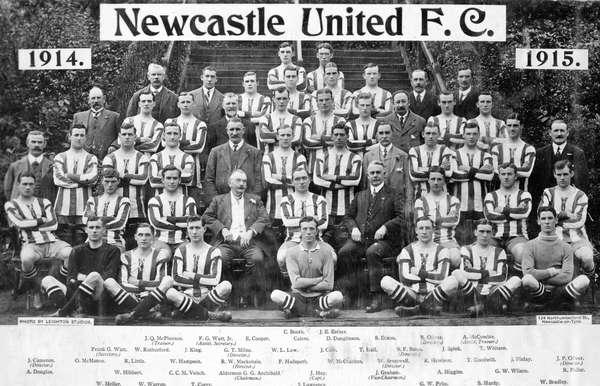
The return match on 22nd April 1899 saw a Sunderland win 0-1 at St James' Park and 22,000 watched it.         First World War Newcastle.........


Tuesday, 23 December 2025

LONDON DERBY TODAY: NORTH v SOUTH HISTORY

 Arsenal  v Crystal Palace Games won by Arsenal: 36 Lost 6 Drawn 17


DateMatchResultScoreCompetition
27 Jan 1934Arsenal v Crystal PalaceW7-0FA Cup
01 Nov 1969Crystal Palace v ArsenalW1-5League Division One
30 Mar 1970Arsenal v Crystal PalaceW2-0League Division One
28 Oct 1970Crystal Palace v ArsenalD0-0League Cup
09 Nov 1970Arsenal v Crystal PalaceL0-2League Cup
14 Nov 1970Arsenal v Crystal PalaceD1-1League Division One
13 Mar 1971Crystal Palace v ArsenalW0-2League Division One
27 Nov 1971Arsenal v Crystal PalaceW2-1League Division One
11 Apr 1972Crystal Palace v ArsenalD2-2League Division One
21 Oct 1972Crystal Palace v ArsenalW2-3League Division One
26 Mar 1973Arsenal v Crystal PalaceW1-0League Division One
10 Nov 1979Crystal Palace v ArsenalL1-0League Division One
22 Mar 1980Arsenal v Crystal PalaceD1-1League Division One
26 Dec 1980Crystal Palace v ArsenalD2-2League Division One
20 Apr 1981Arsenal v Crystal PalaceW3-2League Division One
01 Jan 1990Arsenal v Crystal PalaceW4-1League Division One
14 Apr 1990Crystal Palace v ArsenalD1-1League Division One
10 Nov 1990Crystal Palace v ArsenalD0-0League Division One
23 Feb 1991Arsenal v Crystal PalaceW4-0League Division One
14 Sep 1991Crystal Palace v ArsenalW1-4League Division One
11 Apr 1992Arsenal v Crystal PalaceW4-1League Division One
02 Nov 1992Crystal Palace v ArsenalW1-2Premier League
07 Feb 1993Crystal Palace v ArsenalW1-3League Cup
10 Mar 1993Arsenal v Crystal PalaceW2-0League Cup
08 May 1993Arsenal v Crystal PalaceW3-0Premier League
01 Oct 1994Arsenal v Crystal PalaceL1-2Premier League
25 Feb 1995Crystal Palace v ArsenalW0-3Premier League
18 Oct 1997Crystal Palace v ArsenalD0-0Premier League
15 Feb 1998Arsenal v Crystal PalaceD0-0FA Cup
21 Feb 1998Arsenal v Crystal PalaceW1-0Premier League
25 Feb 1998Crystal Palace v ArsenalW1-2FA Cup
06 Nov 2004Crystal Palace v ArsenalD1-1Premier League
14 Feb 2005Arsenal v Crystal PalaceW5-1Premier League
26 Oct 2013Crystal Palace v ArsenalW0-2Premier League
02 Feb 2014Arsenal v Crystal PalaceW2-0Premier League
16 Aug 2014Arsenal v Crystal PalaceW2-1Premier League
21 Feb 2015Crystal Palace v ArsenalW1-2Premier League
16 Aug 2015Crystal Palace v ArsenalW1-2Premier League
17 Apr 2016Arsenal v Crystal PalaceD1-1Premier League
01 Jan 2017Arsenal v Crystal PalaceW2-0Premier League
10 Apr 2017Crystal Palace v ArsenalL3-0Premier League
28 Dec 2017Crystal Palace v ArsenalW2-3Premier League
20 Jan 2018Arsenal v Crystal PalaceW4-1Premier League
28 Oct 2018Crystal Palace v ArsenalD2-2Premier League
21 Apr 2019Arsenal v Crystal PalaceL2-3Premier League
27 Oct 2019Arsenal v Crystal PalaceD2-2Premier League
11 Jan 2020Crystal Palace v ArsenalD1-1Premier League
14 Jan 2021Arsenal v Crystal PalaceD0-0Premier League
19 May 2021Crystal Palace v ArsenalW1-3Premier League
18 Oct 2021Arsenal v Crystal PalaceD2-2Premier League
04 Apr 2022Crystal Palace v ArsenalL3-0Premier League
05 Aug 2022Crystal Palace v ArsenalW0-2Premier League
19 Mar 2023Arsenal v Crystal PalaceW4-1Premier League
21 Aug 2023Crystal Palace v ArsenalW0-1Premier League
20 Jan 2024Arsenal v Crystal PalaceW5-0Premier League
18 Dec 2024Arsenal v Crystal PalaceW3-2League Cup
21 Dec 2024Crystal Palace v ArsenalW1-5Premier League
23 Apr 2025Arsenal v Crystal PalaceD2-2Premier League
26 Oct 2025Arsenal v Crystal PalaceW1-0Premier League
23 Dec 2025

This period is always a busy time for clubs.....
Arsenal play matches on Dec 8, 11, 14 18 and 21st.
Palace play Nov 30, Dec 3, 7, 11, 14,18 and 20th.
Happy New Year.
Arsenal v Crystal Palace

Carabao Cup QF