Saturday, 8 June 2019

IN THE CORNER

 Not an FA Cup winners' corner flag!

Taken for granted, the corner flag on a pole is a necessity to any game of football. It marks out the extremities of the pitch and has done that since 1863 when the laws were set by the FA.

Included also, were flags on poles planted four yards either side of the goal posts, on the goal line (as you would see in Aussie Rules) but only 5 feet high, as now. The central poles marked the goal and the side poles were there to help award a "rouge" which was a like a try.

If the ball didn't go through the goal but was touched down through the side gaps then this counted as a "rouge", worth a "point" and the number of points came into play when there was a tie on goals. The rouge was established by the Etonians in their own game.

In 1868 the Sheffield Rules got rid of the "rouge" opting instead for a goal kick or a corner kick when the ball went out of play behind the goal line. The FA bowed to the Sheffield Rules in 1872 and adopted the corner and flag, also marking a quadrant one yard in radius set in 1875.

Some times there are flags place one yard off the touchline at the half way line to help the referee with "where is the half way line" decisions!

Clubs that have won the FA Cup are entitled to have a triangular flag on their poles. Otherwise it is a square flag allowed to blow in the wind. I'm not sure anyone takes any notice of this!

I am sure that when there was a corner the majority of the ball had to be inside the quadrant? Now the ball overlaps the line of the quadrant by centimetres!

The small markings on the goal line and touchline to make sure defending players don't encroach closer than 10 yards at a corner are measured from the quadrant line of course.

Corners were regarded as "indirect" until June 1924, so direct goals could not be scored direct from a corner until then. Along came Billy Alston of St Bernards FC, who scored the first legal "direct from a corner goal" in August 1924. 
What about W.H. (Billy) Smith of Huddersfield Town, who scored direct from a corner kick against Arsenal? In August 1924, in the Football League; the flood gates were open! 
Town won 4-0 and later won the League Championship. Smith made 574 apps for Town and scored 126 goals, one directly...well you know that....
Billy Smith Played 1914-1934. | Huddersfield town
Smith got himself sent off for fighting against a Stoke player in a league match and this caused him to be banned from played in the 1920 FA Cup Final; Town lost 1-0 to Aston Villa.

In the 1922 FA Cup Final at Stamford Bridge, Billy scored twice against Preston NE, one a disputed penalty, won by Smith, whom newsreel confirmed, was fouled outside the penalty area. Smith also scored twice in his last game ever v Sheffield Utd in February 1934. 
He then player-managed at Rochdale for a while, 1934-5. 

Born in Tantobie, County Durham in 1895, he died in 1951, from cancer following an "injury" in the game, which resulted in a leg amputation. His son, Conway, played at Town between 1945-51 and his grandson, Robert, played in the last ever game at Leeds Road in 1994. 
Billy also played for England three times between 1922-8. Both Billy and Conway are recorded as scoring 100 goals each in their career.

Willie Davies scored for Cardiff City in the final minute of the FA Cup Rd 4 tie against Leicester City in March 1925, making it 2-1. Cardiff went on the lose in the final to Sheffield Utd.

Thank heavens, the corner post is a flexible thing and not the solid wooden specimen of past seasons, some were square and with dangerous edges! Tosh Chamberlain, a bandy legged Fulham left winger, was renowned for sometimes kicking the flag pole when taking a corner and there have been others who push the post on an angle to allow a full bodied approach, or even pull the pole out of the ground. Referees would stop play and put the flag back into the perpendicular.

Tosh was a real character who postponed his wedding so that he could play for Fulham against Newcastle Utd in a 4th Round FA Cup tie, in which he scored a hat trick but Fulham lost 4-5! he played almost his entire career at Fulham and went to Dover and then Gravesend before he retired.

When Barry Fry was manager of Birmingham City in 1993 he had not won more than two games in fifteen during his first 3 months. Finding that a local "Romany" family had cursed the ground way back, he had the curse removed, by getting a local Romany to pee on each corner post and without taking the "piss", his team began to gain success, winning the next 7 out of 10.


Friday, 7 June 2019

SUMMER OLYMPICS IN OCTOBER!

The English international football season ended in March until 1888 when the England fixture against Ireland at Ballynafeigh Park, Belfast was held on April 7th. England won 5-1 and Lindley (mentioned yesterday) scored in front of 7,000. PM Walters also played.
It was in this season that the word "Soccer" came into use, inevitably first used by Charles Wreford Brown, an Old Carthusian. The Soccer came from Association and he used it as a short phrase to counter the chaps at Oxford University going to play "rugger".

The first June international matches were during England tours, the first one twenty years later in 1908, when the team kicked off against Austria in Vienna on June 6th winning 6-1. The tour included another game v Austria on the 8th (11-1), then on the 10th in Budapest v Hungary (7-0) and on the 13th Bohemia in Prague (4-0). 12,000 watched this match.
Not that he had the car with him, but Bob Crompton of Blackburn Rovers who was capped 41 times was probably the first professional footballer to drive his own car to training in 1908.
Below is the GB Olympic Footy team.

London hosted the Olympics in the Summer and Autumn of 1908..........It was meant to be held at Rome but Mount Vesuvius erupted in 1906 and the Italians had no money to spare on Olympics. So London hosted at short notice offering 12 sports with the White City stadium holding 130,000, built by George Wimpey! The event ran from 27th April to 31st October and included winter sports! 22 nations took part with over 2000 competitors including women for the first time.
For the first time also, Gold, Silver and Bronze medals were awarded over certificates.

In October 1908, Britain hosted the Olympic football tournament at the White City. Great Britain won the Gold medal (for the second time) beating Denmark. Semi-finalists were also Netherlands and France. Other competitors included France B, Bohemia, Hungary, Sweden.

The French were beaten by Denmark in the semi-final 17-1 and were so embarrassed that they declined the invitation to play in the Bronze medal match and so the Neths played Sweden winning 2-0. Hungary withdrew due to the Bosnian Crisis and Bohemia lost its FIFA membership, also withdrawing, so only 6 contested the tournament. There were two French teams and a 17-1 defeat of France A by Denmark.

Thursday, 6 June 2019

CAPTAIN OF ENGLAND AND ANOTHER

Raheem Sterling has said he was left "fuming" after a press release issued by his management company claimed the Manchester City winger would captain England against Netherlands in the UEFA Nations League semi-finals in June 2019. Raheem was awarded the arm band on 6th June 2019, in an important UEFA Nations' League semi-final v Holland, as he earned his 50th cap for his country. He did hand the arm band over to Harry Kane, when he came on to try to save his country's embarrassment late in the game.This is about England captains.

Percy M Walters, his brother Arthur, Charles Wreford-Brown, GO Smith, Basil Patchitt and AG Bower, (all Old Carthusians), PLUS Billy Wright, Bobby Moore, Raheem Sterling all have something in common; you guessed it, they all captained England.

The list contains Old Carthusians (old boys of Charterhouse School) except, of course, for Billy, Bobby, and Raheem whom you should know.

The old boys played as amateurs in the 19th Century when soccer was growing and international matches getting more common. GO Smith you should know because I would have mentioned him before (several times) was the classic amateur, academic, sporting footballer who played for England  20 times and captained them on 13 occasions. The FA would not allow a professional footballer to captain the country, just in case!

Cuthbert Ottaway was the first England captain on 30th November 1872 when England played their first official international match against the Scots, away. He played twice and captained his country both times.

Alexander Morten captained England at home against the Scots in March 1873, a game which England won and it was his only appearance.
The captain was often appointed by the FA as a "head boy" keeping everyone in order! Indeed, in this amateur/pro era, in the event of something spectacular happening in the game, the captain would have reached into his shorts' pocket and given the lad involved a shilling for his trouble.

Other captains include Vivian Woodward of Arsenal, George Hardwick from Huddersfield 1946-8, Dr Tinsley Lindley (OBE eventually for service in WW1) an amateur who never wore football boots! Claude Ashton, a Cambridge University footballer, who with brothers, Hubert and Gilbert, played as a trio for the University and were known as Ashton Villa. Claude played one game for England, as captain.
Billy Wright, of Wolves in the late 1950s-60s, captained England 90 times out of 105 apps.

On this day in 2000 a crowd of nearly 67,000 at Old Trafford saw Manchester United defeat Dynamo Kiev 1-0 to qualify from their Champions League group. The next day United captain Roy Keane, using his usual diplomacy criticised the poor vocal support of the team by the crowd. his main complaint was that the fans in the hospitality boxes "have a few drinks and prawn sandwiches and they don't realise what is going on out on the pitch." From that point the hospitality boxes contained what became known as the "prawn sandwich brigade". Roy had made his mark, so that when ever a copy of his autobiography was sold, the shop owner gave the buyer a free freshly prepared prawn sandwich.


Wednesday, 5 June 2019

UEFA NATIONS' LEAGUE

Portugal v Switzerland is a UEFA Nations League semi-final, being played in the Estadio do Drago today. England meet The Netherlands tomorrow at the same venue.
Completed in 2004, the first match in the "Stadium of the Dragon" was in June 2004 a UEFA Group match v Greece which was lost 1-2.
 Image result for estadio dragao bobby robson

Bobby Robson managed at Porto and had huge success winning two Portuguese league titles, 2 cups and a super-cup between 1993-6, when illness took him away from the front line.
While there he influenced the careers of Mourinho, Villas-Boas and Guardiola. He was more than a manager to Porto, a man who brought the community together. of course he did the same in Newcastle and a pre-season commemorative match between the two clubs was played in 2018 to celebrate 125 years of football at both clubs.

Image result for estadio dragao bobby robson

The stadium has a number of uses including as a race track.

As favourites to win the Nations League final, Ronaldo is the main man playing for hosts Portugal. He has won the Balon d'Or and is supported by Joao Felix, the exciting Benfica teenager, with  Patricio, Neves, Moutinho and Jota from Wolves and Silva of Man City. Fernando Santos led his squad to the European Championship victory in France last time out and they are favourites to win this tournament now. Yes here's Cristiano's TWO busts....you can understand why they had a second one commissioned.
Image result for Ronaldo statue
The Switzerland team, includes Premier League players, Schar of Newcastle, Shaquiri of Liverpool and Xhaka of Arsenal.
Image result for UEFA Nations League55 European teams started the campaign which is played every two years, creating a competitive tournament for European teams between FIFA World Cup and UEFA European Championships. It replaces meaningless friendly internationals played by European nations between the two major tournaments. So far so good.
Tuesday, 4 June 2019

LILY PARR-FIRST LADY FOOTBALL SUPERSTAR.

Three cheers for the statue erectors!
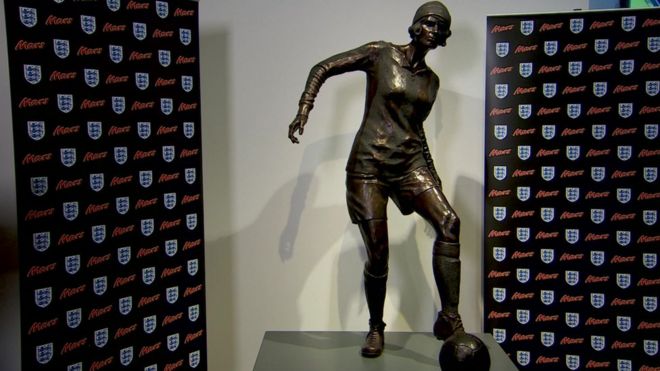
Another one is gracing our land; that is a life size statue of the great Lily Parr, sited outside the National Football Museum in Manchester. The statue, by Hannah Stewart, and sponsored by Mars, is the first featuring a Lady Footballer and coincides with the opening of the Womens' World Cup in France. It will stand in the "Players' Zone", among the great influences on Association Football-male and female.
lily

Born in St Helens in 1905, at 14 years old and encouraged to play by her two brothers, she scored 34 goals for the local St Helens Ladies team.
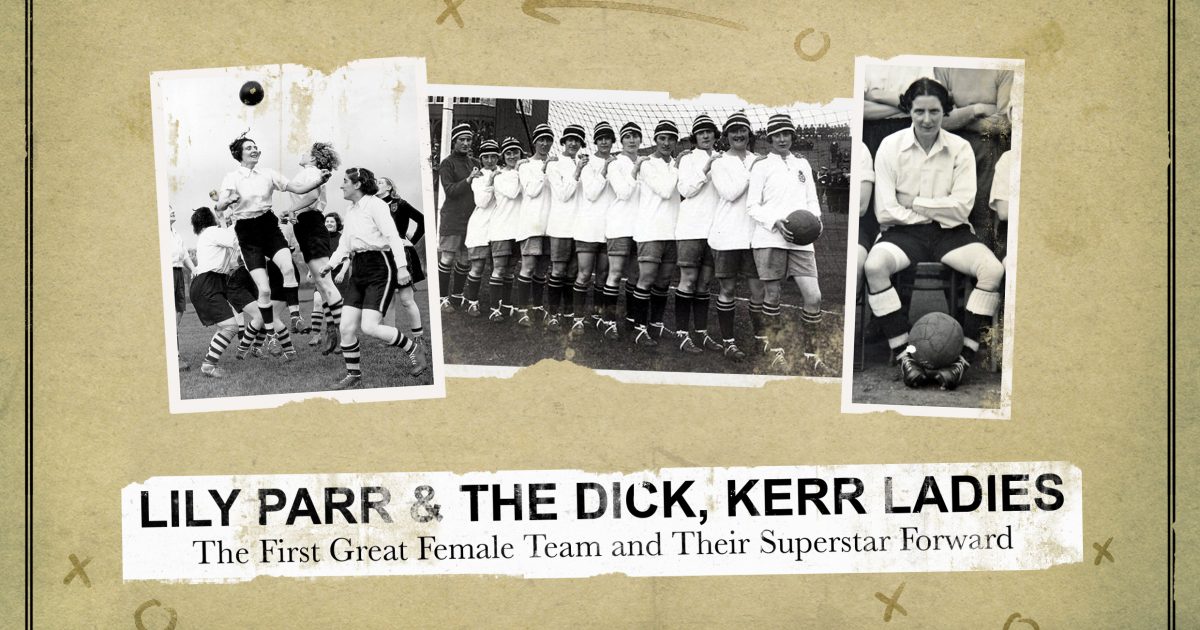
A year later, in 1920, she joined the Dick, Kerr and Company Ladies team, made up from the work force of the local Locomotive Factory, which was making munitions at the time due to the war.  Dick Kerrs' team represented England in the first Ladies' international against France in 1920, winning 4-0.

 A 6' tall, chain smoker (not at 14!) she was sometimes "paid" in packets of Woodbines, as a reward for her efforts. She started out as a full back and was converted to left wing.
Lily was a nurse in a local psychiatric hospital and lived with her female partner, championing (even at that time) LGBT.

Here's some past stuff on our gallant lady footballers.
https://baileyfootballblog.blogspot.com/2017/07/dickladies-and-co.html

https://www.bbc.co.uk/news/business-43139535

On Boxing Day, 1920 the Dick, Kerr Ladies played St Helen's Ladies at Goodison Park, attracting a crowd of 53,000. In 1921 the FA banned womens' football which remained outlawed officially until 1969. There has been a lot of progress since then.
In 1922 at the Olympics, she was part of the GB Relay team!

Lily Parr, played on until 1951 and in Preston died on May 24th 1978.

Monday, 3 June 2019

ACROSS THE BORDER AND BACK

June 3rd 2008 saw the resignation of Gretna FC from the Scottish League. Founded in the 19th C as Gretna Green FC, they played local leagues. The club then was reformed in 1946 by local servicemen after the war, The Anvils played in the English "amateur" leagues originally, like the Carlisle and District League, the Northern League Div 2 and the Northern Premier League.
In the 1990s they played in the English FA Cup, the only Scottish club to achieve this since Queen's Park in 1887.
GretnaFC crest.png

They were playing in the English Northern League in 2001/2 and then applied and were accepted into the Scottish League, replacing Airdrieonians. In 2007/8 they had been to the Scottish Cup Final (June 3rd), losing on a penalty shoot out to Hearts. They played in the UEFA Cup as a result.

It then all went downhill with not much money, the club still playing at Raydale Park. Their financier pulled out with ill health also and the club went into administration, coming bottom of the SPL attracting crowds of only 450. The club was demoted to the 4th Tier in Scotland and went into liquidation, resigning from the Scottish League, reforming in the East of Scotland FL in July under the new name of Gretna 2008.

Today's National League Paper contained a letter from a chap in Topsham, Devon, who was concerned that Berwick Rangers FC (founded 1884) had dropped below the Scottish League Division Two, into the Lowland League. Before their relegation, the Borderers were the only England club to play in the Scottish Professional Football League.  He wrote that there was a possibility of Gateshead collapsing, allowing Berwick Rangers to join the English National League North, geographically a reasonable suggestion, Berwick-on-Tweed of course, being in England. Why not Gretna!!
BerwickRangersLarge.png
Following  this season's Play-offs in Scotland, Cove Rangers from the Highland League won promotion to the Scottish League defeating Berwick Rangers, from the Lowland Football League, 7-0 over two legs, gaining promotion to the Third Division. The story is, the paper felt, that the Scottish pyramid is gaining in strength; 7-0?? maybe bits of it?

Meanwhile by in England, in 1950 the Football League was expanded to 92 clubs from 88. Two clubs joined each of the regionalised Third Divisions; South: Colchester and Gillingham and North: Scunthorpe and Lindsey Utd and Shrewsbury Town. They played each other on the first day of the new season each game ending 0-0. All four remain in the FL!!


Sunday, 2 June 2019

SPURS SUNK BY GERMAN "SUBS"

Apologies to my regular "reader" (you still there mate?) for missing yesterday but I was on duty at the Hepworth United FC Club Day....8am through to ko in Madrid. I dare not stay at the clubhouse for fear of being over emotional, so I went home and saw the Spurs' game fall apart within a minute or two. Can't think of a nicer person to lose to than Klopp!

So June 1st faded away into European Cup history and having seen Spurs sunk it is quite a coincidence that:
....on June 2nd 1940 during the war, an anti-submarine trawler named "HMT Spurs" was badly damaged in an attack at sea by German vessels. 

Built 1933: this is it.
A similar anti-sub vessel, "The "Blackburn Rovers" warship was sunk and the football club named  "Wolves" and "Grimsby Town" boats were also damaged during similar confrontations in the war.

On June 2nd 1924 the Football League decided that away teams should change shirts if there is a colour clash having previously worked on the principle that it should be the "junior club in league service" that changed; seniority!

In 1962 on the said date, Oxford United FC joined the Football League for the first time, to replace Accrington Stanley (who are they?) who had run into financial difficulties as early as February, in the 1961-2 season.

And finally during June 2nd 1978, Tunisia became the first African country to win a World Cup in the "Final stages" having qualified through the African play offs and then meeting and beating Mexico 3-1 in Roasario, Argentina. They were quoted at 1000-1 at the start of the tourney. They were also 0-1 down at half time. Having virtually won the game with a Dhouieb goal, three minutes to go, Tunisian Khemais Labidi replaced Lahzami to play in his only World Cup appearance of TWO minutes, the shortest World Cup career in history. This was equalled by Trobbiani of Argentina in 1986. John Gordon of Scotland was refereeing and therefore keeping time!

Tunisia having only been in international football since 1957 and in FIFA since 1960, also held Germany to a 0-0 draw, but then bowed out with only 3 points in their group, having lost 0-1 to Poland. (2 points only for a win those days).
Logo federation tunisienne de football-copy.svg